
 PDF Download
 PubReader
 Export Citation
 Share Facebook
 Share Twitter
 Cited by 0 Article
 Metrics (View:479)







I. Introduction
Sukuk has come to occupy a prominent place in contemporary discussions of Islamic finance and cross-border capital markets. Over the past two decades, it has been presented not merely as a Sharia-compliant substitute for conventional bonds, but also as a financial technique capable of broadening investor participation, mobilizing long-term capital, and supporting sovereign and corporate financing needs.
Comparative and policy-oriented writing has likewise emphasized its expansion across both Muslim-majority and non-Muslim jurisdictions, its utility in infrastructure and public finance, and its role in diversifying funding channels.1) Yet the increasing scale and visibility of the sukuk market do not by themselves resolve the more difficult legal question. Relatively limited attention has been paid to whether that commercial expansion has been accompanied by comparable clarity and stability in the legal architecture of the instrument, particularly from the standpoint of securities law and international finance law.2)
That tension lies at the center of the present article. Although sukuk is frequently described as an innovative capital-market instrument grounded in asset participation and risk sharing, its practical legal operation often depends on structures that remain deeply contested.3) Questions persist regarding the true nature of the rights granted to sukuk holders, the degree to which underlying assets are genuinely transferred or segregated, the legal significance of beneficial or usufruct-based ownership claims, the enforceability of investor remedies upon default, and the relationship between Sharia legitimacy and governing law in formal dispute resolution.4) These questions are not peripheral. They bear directly on whether sukuk should be understood as a coherent and reliable instrument of modern finance, or rather as a hybrid structure whose conceptual appeal exceeds its legal certainty.
The problem becomes more serious once sukuk is assessed not only within the internal discourse of Islamic finance, but also against the wider demands of international finance law and securities regulation. In that broader setting, the relevant inquiry is not simply whether sukuk can be marketed successfully or approved by Sharia boards. The more demanding question is whether its legal architecture provides the degree of certainty, transparency, enforceability, and institutional coherence expected of instruments that claim a durable place in sophisticated domestic and international capital markets.5) A financial instrument may achieve commercial success while still exhibiting unresolved legal weakness. In the case of sukuk, those weaknesses are often revealed precisely where legal robustness matters most: in asset characterization, insolvency, investor recourse, regulatory standardization, and cross-border enforcement.6)
This article reframes the sukuk debate from a general inquiry into Sharia compliance into a specific assessment of institutional maturity. It argues that the current legal architecture, specifically regarding asset segregation, SPV autonomy, and trustee responsibility, has not yet achieved the degree of legal consolidation required by international finance law. Consequently, while sukuk has achieved commercial normalization, its status as a stable component of global capital markets remains qualified by these unresolved structural tensions.7)
The article proceeds as follows. Section II examines the paradox between commercial expansion and legal stagnation in the sukuk market. Sections III to VI analyze the principal legal and regulatory tensions affecting sukuk, including legal characterization, ownership, SPV structures, trusteeship, default remedies, and comparative legislative approaches. Section VII evaluates sukuk’s broader contribution to international finance law, while Section VIII proposes directions for a more coherent securities law framework. Section IX concludes.
II. The Paradox of Growth: Commercial Expansion vs. Legal Stagnation
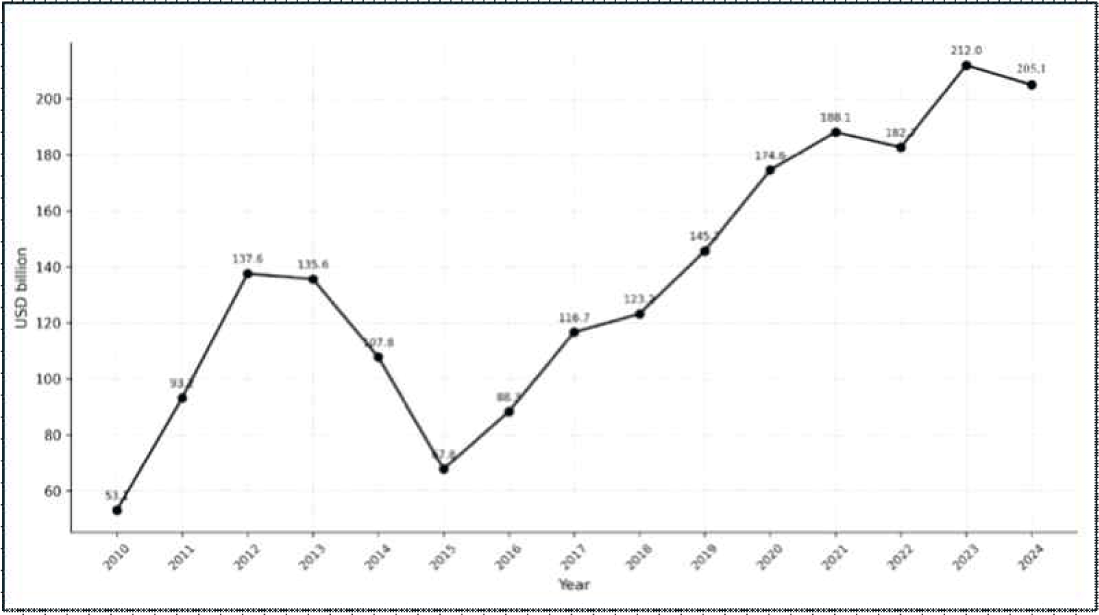
The commercial expansion of sukuk is no longer open to doubt. As Figure 1 indicates, total global sukuk issuances increased from USD 53.1 billion in 2010 to USD 205.1 billion in 2024, notwithstanding periodic fluctuations during the intervening years. The overall trajectory is therefore one of sustained market consolidation rather than episodic experimentation. By the early 2020s, sukuk had clearly acquired the scale, continuity, and institutional visibility of a mature financing instrument within contemporary capital markets.
Yet growth in volume should not be confused with legal maturity. The significance of the market’s expansion must be assessed alongside its structural distribution. Here, Figure 2 is particularly instructive. It shows that international sukuk issuance from January 2001 to December 2024 remained heavily concentrated in a narrow set of regional and institutional centers. The GCC and Middle East alone accounted for USD 262.01 billion (48.91%) of total international issuance value, while Supranational issuers represented a further USD 159.77 billion (29.82%). By contrast, Asia and the Far East contributed USD 71.92 billion (13.39%), Europe and Others only USD 39.74 billion (7.32%), and Africa remained marginal at USD 2.28 billion (0.43%). The market’s growth, in other words, has been substantial, but its geography remains highly concentrated.
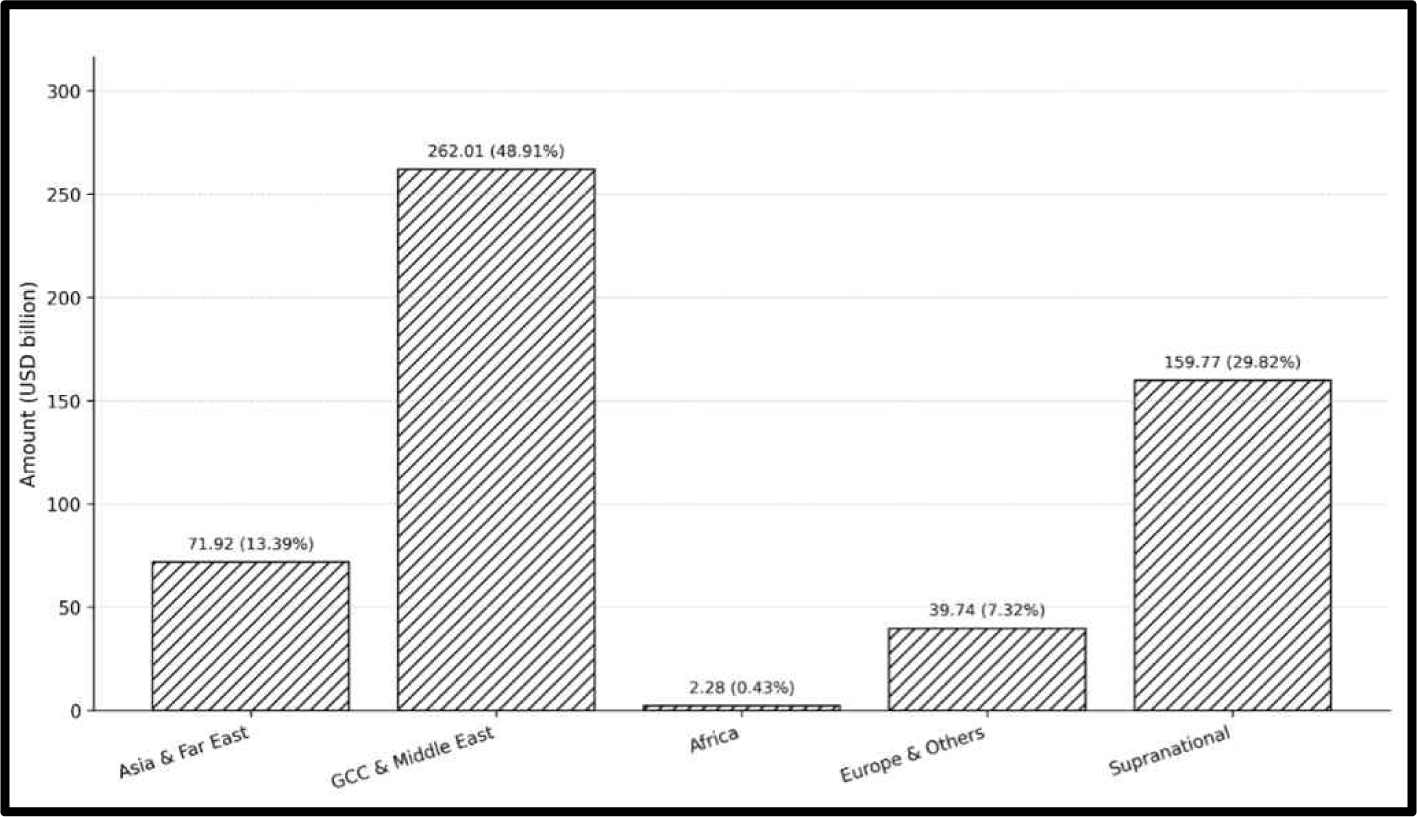
Read together, the two figures disclose a structural asymmetry central to the present inquiry. While Figure 1 demonstrates substantial commercial growth, Figure 2 reveals that this expansion remains concentrated within a narrow group of jurisdictions. This concentration suggests that sukuk’s development has depended less on the emergence of a unified legal model than on the ability of specific supportive ecosystems to accommodate its complexity through tailored, but fragmented, regulatory adjustments.
This distinction is legally significant because the maturity of a financial instrument is measured not by issuance volume alone, but by its portability and predictability across borders. The persistence of localized and fragmented accommodation in the face of commercial success indicates that normalization has outpaced juridical consolidation. Therefore, rather than proving that structural tensions have been resolved, sukuk’s commercial success serves as the necessary starting point for a deeper analysis of its incomplete legal consolidation.
III. Legal Certainty and Institutional Integration in International Finance
If the growth of sukuk does not by itself establish legal maturity, a further question follows: by what standard should such maturity be assessed? In the present article, the relevant benchmark is not drawn from the internal rhetoric of Islamic finance alone, but from the broader demands of international finance law. That field is not a single codified body of rules. Rather, it is a hybrid legal domain operating across public regulation, transnational standard-setting, and private cross-border transactions.8) Within that framework, the legal significance of a financial instrument depends not merely on its commercial success, but on the degree to which it can function with sufficient certainty within the legal and institutional structures that govern modern capital markets.
This benchmark has at least two dimensions. The first is regulatory and institutional. As the literature on international financial governance shows, modern finance is shaped not only by binding state law, but also by transnational forms of coordination and soft law generated through bodies such as the Basel Committee, IOSCO, and related standard-setting networks.9) The second is transactional and private-law based. Cross-border finance continues to depend on the predictability of governing law, the intelligibility of proprietary claims, the enforceability of contracts, and the treatment of rights in insolvency.10) In that sense, institutional integration into international finance law requires more than market circulation. For present purposes, such integration requires sufficiently clear rules on investor rights, asset segregation, trustee obligations, insolvency treatment, and cross-border enforceability. It requires that an instrument be capable of operating within both a regulatory environment concerned with disclosure, investor protection, and systemic reliability, and a transactional environment fundamentally intolerant of ambiguity in asset segregation, recourse, and enforcement.11)
For present purposes, therefore, the question is not whether sukuk can attract issuers, investors, or legislative accommodation. The more precise question is whether its legal architecture exhibits the degree of certainty, coherence, and transferability expected of an instrument claiming a durable place in sophisticated capital markets. On that measure, the central issues are not abstract. They concern the classification of investor rights, the legal effect of asset linkage, the role of SPVs and trustees, the predictability of remedies in default, and the relation between Sharia-based legitimacy and state-law enforceability. These are the criteria by which the discussion that follows evaluates sukuk. The inquiry now turns, therefore, from the fact of market growth to the legal form of the instrument itself, beginning with the problem of characterization.
IV. Sukuk Between Financial Innovation and Legal Ambiguity
Sukuk is commonly described as a Sharia-compliant alternative to conventional bonds, capable of mobilizing capital for sovereign borrowing, infrastructure projects, and corporate financing while avoiding the payment of interest in its formal structure. Yet, viewed against the benchmark of legal certainty and institutional integration outlined in the previous section, the significance of that claim is not exhausted by market growth or by functional equivalence to debt. The more fundamental difficulty is that sukuk is promoted as a distinct instrument while its legal identity remains unstable across doctrine, legislation, and practice.12)
This instability is visible from the very definitions used to describe sukuk. The widely cited AAOIFI formulation defines sukuk as certificates of equal value representing undivided shares in ownership of tangible assets, usufructs, services, or the assets of specific projects or investment activity.13) That definition is important because it links sukuk to ownership rather than to a mere payment obligation. At the same time, several regulatory systems have accommodated sukuk through legal mechanisms that do not always insist on full proprietary transfer in a classical sense, but instead permit structures built around beneficial rights, lease-based returns, or functional replication of bond economics.14) The result is that The formal proprietary language often coexists with legal and economic arrangements that remain much closer to secured or even unsecured debt than the rhetoric of participatory finance suggests.15)
For that reason, the legal question is not simply whether sukuk differs from bonds at the level of religious justification. The more difficult question is whether sukuk has achieved a sufficiently coherent legal characterization to sustain its claim to separate doctrinal status in modern capital markets. This question matters because legal characterization determines the position of investors, the scope of issuer obligations, the treatment of underlying assets, and the remedies available in insolvency or enforcement proceedings.16) If the instrument is said to represent ownership, but investors are ultimately treated as ordinary creditors upon default, then the legal value of the ownership claim becomes doubtful.17)
A recurring source of ambiguity lies in the tension between the conceptual description of sukuk and its regulatory accommodation in different jurisdictions. Jurisdictions have not approached sukuk through a single legislative model. In some systems, dedicated statutory frameworks have been adopted to authorize and structure sukuk issuance. Indonesia’s sovereign sukuk regime, for example, expressly authorizes “Sovereign Sharia Securities” under Law No. 19 of 2008 and empowers the government to use state-owned assets as the basis for issuance under Articles 4, 5, 10, 11, and 12.18) Others have preferred to amend existing securities, tax, or public finance legislation in order to fit sukuk within an already existing market architecture. The United Kingdom took that route through Section 157 of the Finance Act 2008 and the Government Alternative Finance Arrangements Regulations 2014, which enabled the Treasury to raise money through alternative finance arrangements that replicate the economic effect of conventional public borrowing without formally using interest.19) Turkey adopted a similar enabling technique by amending its Public Finance and Debt Management Law in 2012 to authorize the issuance of lease certificates through asset-leasing companies under Article 7/A.20)
These differing legislative approaches are significant not merely because they facilitate sukuk issuance, but because they produce divergent assumptions regarding ownership, investor rights, and regulatory classification. The comparison reveals that sukuk has yet to crystallize into a uniform legal category; instead, it continues to oscillate between proprietary instrument, bond equivalent, and hybrid financing structure, depending on the jurisdiction and governing framework. This ongoing conceptual instability suggests that the market’s commercial success has occurred partly in spite of, rather than because of, its underlying legal architecture.
The ambiguity becomes sharper when one turns from legislation to the internal structure of sukuk transactions. A major distinction in both the literature and market practice is that between asset-backed and asset-based sukuk. This distinction is often presented as technical, but in legal terms it goes to the core of the instrument’s identity. In asset-backed sukuk, the structure is intended to give investors a real proprietary interest in identified assets, together with some degree of bankruptcy remoteness through transfer to an SPV. In asset-based sukuk, by contrast, the assets may function more as a reference point for structuring returns than as truly segregated proprietary security, leaving investors dependent on the creditworthiness and solvency of the obligor.21) The point is not simply that these two structures involve different risks. It is that they support different legal narratives about what sukuk holders actually own and what they can actually enforce.
The position of investors is further complicated by the use of ownership concepts borrowed from Anglo-American law, especially the separation between legal ownership and beneficial ownership. Some sukuk structures have adopted beneficial ownership language because it facilitates issuance and asset transfer without requiring full alienation of public or commercial assets.22) Yet this adaptation creates serious doctrinal tension. In jurisdictions rooted in civil law, or in systems that expect greater clarity regarding patrimonial separation, the idea that sukuk holders are owners only in a beneficial or usufructuary sense may generate uncertainty about the exact content of their rights. That uncertainty affects not only investor understanding, but also insolvency, attachment, trustee obligations, and judicial interpretation.
The SPV, usually presented as the mechanism that secures legal separation, is itself part of this ambiguity. In sovereign sukuk practice, the SPV commonly acts as the issuing intermediary through which assets or rights are transferred, leased back, and ultimately repurchased.23) In several jurisdictions, legislation had to be amended not only to permit sukuk issuance, but also to authorize the use of public assets and SPV-based structures.24) The legal role of the SPV is therefore not incidental. It is a substitute for the lack of direct fit between conventional public borrowing law and sukuk architecture. The need for special statutory empowerment confirms that sukuk does not simply emerge from ordinary debt law. It must often be enabled through carefully tailored legislation.
This point is central to the article’s argument. The challenge lies not merely in the use of SPVs or beneficial ownership techniques, both of which are well established in Islamic finance practice, but in the substitutive function they perform. These mechanisms effectively compensate for the absence of a settled legal category capable of defining sukuk holder rights, asset segregation, and enforcement outcomes across jurisdictions. The SPV, therefore, reflects both legal innovation and legal fragility; its effectiveness depends less on a uniform doctrine of sukuk than on jurisdiction specific legislative support and localized contractual design.
The question of governing law adds another layer of uncertainty. Governing-law clauses can become a major source of difficulty in sukuk disputes, particularly where the commercial documents are drafted under English law while the transaction is simultaneously presented as Sharia-compliant. This duality permits the instrument to benefit from the predictability of a mature commercial law system, but it also leaves room for later conflict if an issuer invokes Sharia non-compliance to challenge its own obligations. That problem became dramatically visible in Dana Gas PJSC v. Dana Gas Sukuk Ltd. [2017] EWHC 2928 (Comm), where the issuer argued that the sukuk had become non-compliant with Sharia and therefore unenforceable, while the English High Court upheld the validity of the relevant purchase undertaking and financing structure.25)
The Dana Gas litigation vividly illustrates how differences between governing law systems expose structural uncertainty within sukuk transactions. While the issuer relied on arguments concerning Sharia noncompliance before proceedings in the Sharjah courts (UAE), the English High Court treated the dispute primarily through the enforceability of the contractual documentation and purchase undertaking under English commercial law. The case, therefore, demonstrates not merely a dispute over religious interpretation, but a deeper divergence between Sharia legitimacy and state law enforceability in cross border sukuk structures. It further reveals how the absence of a unified transnational legal framework permits parties to invoke competing legal narratives, thereby navigating the gap between Sharia based legitimacy and international commercial expectations.
The Dana Gas litigation also highlights a broader point. Sukuk’s legal ambiguity does not arise only because courts disagree about religion. Rather, it arises because the instrument rests on two distinct sources of normativity that do not always coincide: Sharia legitimacy and state-law enforceability.26) Where these two layers are aligned, the structure may appear stable. But where they diverge, especially in cross-border defaults, the result can be forum conflict, contradictory judgments, and investor uncertainty. There is therefore a need for clearer legal treatment of governing-law clauses, stronger disclosure, and more consistent cross-border enforcement standards.
This problem is reinforced by the limited and uneven standardization of sukuk governance. Bodies such as AAOIFI and the IFSB have attempted to provide guidance on Sharia standards, disclosure, and legal structure, yet their norms are not uniformly implemented across jurisdictions.27) The result is a fragmented landscape in which some markets adopt detailed disclosure and supervisory structures, while others rely more heavily on contractual drafting and transaction-specific certification. Malaysian regulation, for instance, has been supported by instruments such as the Capital Markets and Services Act 2007 (Act 671), the Prospectus Guidelines, and the Registration of Shariah Advisers Guidelines 2009, all of which form part of a more developed regulatory setting.28) By contrast, some Arab legal discussions and legislative experiences reveal continuing uncertainty regarding ownership doctrines, the legal treatment of sukuk-holder rights, and the integration of Sharia requirements with positive law.29) The point is not that one region is uniformly stronger than another, but that comparative practice still does not support confident assumptions of legal equivalence across sukuk markets.
At bottom, the ambiguity of sukuk begins at the level of doctrinal classification. The instrument is described through the language of ownership, asset participation, and Sharia compliance, yet its treatment across statutes, cases, and transaction structures often remains closer to hybrid or debt-like arrangements.30) Measured against the standards identified in the previous section, this instability is significant because it affects precisely those features on which institutional integration depends: the intelligibility of investor rights, the coherence of proprietary claims, and the predictability of enforcement across jurisdictions.
That instability becomes still more serious once one moves from conceptual description to transactional design. The next section therefore turns from the problem of characterization to the structural tensions embedded in sukuk itself, particularly in relation to ownership, SPVs, trusteeship, and remedies in default.
V. Structural Legal Tensions in Sukuk Design
The legal fragility of sukuk becomes most visible not at the level of general definition, but within the architecture of the transaction itself. Once one moves from the language of Sharia-compliant financing to the mechanics of issuance, transfer, trust, servicing, repurchase, and enforcement, a series of structural tensions emerges. These tensions concern, above all, the meaning of ownership, the actual function of the SPV, the role of trustees and arrangers in protecting investors, and the remedies available when the issuer defaults.
The first and most persistent tension lies between the promise of ownership and the reality of control. As indicated above, sukuk is described as representing undivided shares in assets or in the usufruct generated by them.31) That description, however, does not itself resolve what kind of ownership is being created, whether it is legal, beneficial, usufructuary, or merely contractual in effect. In practical structures, the relevant documents often distribute the incidents of ownership among several actors: the originator retains operational control, the SPV becomes the issuer and nominal holder of rights, the trustee holds the trust assets for investors, and the obligor may simultaneously undertake to repurchase the assets at maturity. At the transactional level, the incidents of ownership are often divided in ways that narrow the practical content of investor rights.
This problem is especially acute where the structure relies on beneficial ownership rather than outright transfer of title. For instance, in common-law jurisdictions such as the United Kingdom and Malaysia, the law is more comfortable with separating legal ownership from beneficial ownership, so that formal transfer to an SPV or trustee can coexist with continuing practical control by the originator or sovereign. By contrast, in jurisdictions whose legal systems do not ordinarily recognize such splitting with the same doctrinal ease, the transplantation of these ownership concepts can produce uncertainty about the precise content of investors’ rights.32) The Indonesian sovereign sukuk framework illustrates this tension clearly. Article 11 of Law No. 19 of 2008 permits the government to sell or lease only beneficial rights in state assets for a maximum period of sixty years, while Article 12 requires those rights to be repurchased at maturity.33) This arrangement makes the issuance legally possible while preserving state ownership in the long run, but it also underlines that what is transferred to investors is not full dominion over the underlying public asset.
For this reason, the issue is not simply whether ownership exists in an abstract sense. The more important question is whether the proprietary language in sukuk documents performs substantive legal work or merely supports the formal differentiation of sukuk from bonds. This distinction becomes decisive in default scenarios. Where the structure does not confer authentic asset ownership, investor rights may collapse into claims resembling those of unsecured, or only weakly protected, creditors. That is one reason why the distinction between asset-backed and asset-based sukuk remains legally central. Asset-backed sukuk aspires to give investors a real proprietary claim and some degree of bankruptcy remoteness. Asset-based sukuk, however, often leaves the asset as a reference point for structuring returns rather than as a truly enforceable pool of segregated value.
The second structural tension concerns the role of the SPV. In theory, the SPV is presented as the device that makes ownership transfer, legal segregation, and Sharia-compliant structuring possible. In the classic ijara-sukuk arrangement,34) the SPV commonly acts simultaneously as issuer, trustee or lessor, and holder of the trust assets on behalf of sukuk holders, while the government appears as seller, lessee, servicing agent, and obligor under a purchase undertaking.35) This structure is elegant on paper because it distributes legal roles across a transaction chain that avoids direct interest-bearing borrowing. Yet the multiplication of roles also reveals the artificiality of the arrangement. It is a legally engineered intermediary designed to reconcile ownership language, cash-flow generation, and repurchase commitments.
That engineering becomes particularly visible in sovereign settings. Countries that wished to issue sovereign sukuk often had to amend debt-management laws, finance laws, company laws, or tax rules to authorize the creation and operation of SPVs. Indonesia established Perusahaan Penerbit SBSN under Article 13 of Law No. 19 of 2008 and Government Regulation No. 56 of 2008 as a dedicated, wholly government- owned company to issue sovereign sukuk and act as trustee for investors.36) Turkey used an amendment to its Public Finance and Debt Management Law to authorize the Treasury’s asset-leasing company.37) The United Kingdom relied on the Finance Act 2008, the Government Alternative Finance Arrangements Regulations 2014, and associated amendments to regulated-activities rules so that a company related to HM Treasury could serve the necessary intermediary function.38) These examples show that the SPV is not merely a neutral technical convenience. Its operation often depends on express statutory construction because the ordinary legal framework of public borrowing does not itself accommodate sukuk.
This point has two implications. First, the SPV can support legal segregation only to the extent that the surrounding law truly insulates the assets and clarifies the rights of holders. Second, the existence of an SPV does not by itself create bankruptcy remoteness. The relevant question is whether earlier Indonesian devices, such as the Collective Investment Contract used in asset-backed securitization, had sufficient separate legal personality and genuine bankruptcy remoteness from the originator.39) The same concern applies more broadly. If the SPV is fully dependent on the originator, managed by the same officials, and funded only for the life of a specific transaction, the rhetoric of separation may be stronger than the practical autonomy of the entity itself.
The third tension lies in the relationship between trusteeship and investor protection. Because sukuk structures commonly interpose a trustee or trustee-like SPV between the assets and the investors, the adequacy of trustee duties becomes central to the enforceability of holder rights. Accordingly, passivity or ambiguity on the part of the trustee can significantly weaken investor protection in distress. One of the most revealing examples is Bank Islam Malaysia Berhad v. TMF Trustees Malaysia Berhad & Ors [2019] MLJU 1380, where the trust deed did not include a sufficiently clear event-of-default mechanism to trigger immediate repayment obligations irrespective of maturity dates. When the issuer failed to pay principal on the maturity date and the sinking fund account was insufficient, the trustee did not declare an event of default, leaving sukuk holders without a decisive enforcement route. The High Court ultimately required equitable distribution of the available funds among the holders whose sukuk had matured on the default date, but the case exposed how the neutrality or passivity of a trustee can become a structural weakness where the trust deed does not clearly impose a duty to act.40)
The significance of trustee obligations is also visible in CIMB Bank Bhd v. Maybank Trustees Bhd & Other Appeals, which illustrates the potential liability of trustees and arrangers for negligence in safeguarding investor interests.41) This is important because sukuk investors are often told that the trust structure protects them through asset holding, declarations of trust, and undertakings.
Yet these cases demonstrate that trustee protection in sukuk structures cannot rest on the formal existence of a trust arrangement alone. Its effectiveness depends on clearly defined fiduciary obligations, precise default triggering mechanisms, acceleration rights, and disclosure duties, as well as the judicial readiness to enforce those obligations consistently during periods of financial distress. The issue, therefore, is not merely one of transactional drafting, but the broader absence of harmonized standards governing trustee conduct and investor protection across the global sukuk market.
Closely related is the role of servicing agents and obligors. In the standard sovereign ijara structure, the obligor commonly undertakes to repurchase the assets on the scheduled dissolution date, while the government, acting as servicing agent, remains responsible for maintenance, taxes, and total-loss issues. These arrangements are meant to stabilize returns and preserve the economic viability of the structure. But they also demonstrate that the originator often retains extensive economic and operational control over the very assets said to underpin investor ownership. In substance, this can make the investors’ interest look less like ownership in a managed asset and more like a claim backed by undertakings from the obligor. That does not automatically invalidate the structure, but it complicates the assertion that sukuk represents a fully distinct logic of financing.
The fourth major tension concerns remedies in default. Sukuk remedies vary widely across jurisdictions and are often constrained by the combination of contractual drafting, governing law, and regulatory environment. In asset-based structures, investors generally lack direct ownership of the underlying assets and therefore cannot easily seize or liquidate them in the event of default. Instead, their practical recourse is often limited to contractual claims against the obligor, enforcement of purchase undertakings, or negotiated restructuring. This helps explain why defaults such as Nakheel, Saad Group, East Cameron, MEX II Sdn Bhd, and Serba Dinamik Holdings Berhad have generated persistent concern over the adequacy of remedies, the role of governance failure, and the lack of standardized enforcement tools.42)
The Dana Gas dispute remains the most striking illustration of how structural design interacts with default remedies. In Dana Gas PJSC v. Dana Gas Sukuk Ltd. [2017] EWHC 2928 (Comm), the issuer argued that the sukuk had become non-compliant with Sharia and therefore could no longer be enforced as structured. The English High Court, however, upheld the relevant contractual obligations, including the purchase undertaking, thereby privileging the transaction documents and governing law over the issuer’s later attempt to invoke Sharia non-compliance as a defense.43)44) This litigation demonstrates a structural vulnerability in sukuk design: if the transaction’s legal enforceability ultimately depends on secular contractual documents while its market legitimacy depends on Sharia representation, issuers may exploit the gap between the two. The problem is not only forum conflict between English and UAE proceedings. It is that the structure itself permits divergent narratives of obligation: one grounded in commercial law, the other in post hoc Sharia challenge.
The same underlying weakness appears in governance-related default cases, particularly Bursa Malaysia Securities v. Serba Dinamik Holdings Bhd [2022] MLJU 1999, which shows how inadequate disclosure, accounting irregularities, and regulatory resistance can undermine confidence in sukuk and complicate the protection of holders.45) These disputes demonstrate that the legal fragility of sukuk extends beyond theoretical debates concerning ownership or Sharia structure. In practice, many of the most significant risks take the form of familiar securities law concerns, including disclosure failures, governance weaknesses, reporting irregularities, and uncertainty regarding regulatory enforcement. The increasing convergence between sukuk disputes and conventional securities litigation therefore suggests that market expansion has not eliminated the need for clearer supervisory oversight and more coherent investor protection mechanisms. In this respect, sukuk does not escape the ordinary demands of capital-market governance simply because it is framed as Islamic finance.
A further tension arises from the interaction between transaction design and tax or regulatory accommodation. In the United Kingdom, amendments were required to prevent sukuk from becoming commercially unattractive relative to conventional bonds because of stamp duties, corporate tax, income tax, capital gains tax, and value-added tax consequences associated with repeated asset transfers.46) The need for special tax rules, equivalent-treatment regulations, and amendments to regulated-activities orders shows that sukuk’s legal viability often depends on a significant amount of regulatory repair. Similar measures were needed in Turkey through amendments to tax laws and capital-market rules, including the 2010 Capital Markets Board Communiqué (Series III, No. 43), later Borsa Istanbul circulars, and the enactment of Law No. 6332 together with the 2013 Communiqué (Series III, No. 61/1).47) Such reforms are important and often effective. But they also confirm that sukuk’s distinctiveness does not naturally fit the surrounding financial-law environment. It must be legislatively supported at multiple points to prevent the structure from becoming less efficient or less secure than conventional debt.
Taken together, these tensions show that the difficulties of sukuk are embedded in transaction design rather than arising only from poor drafting or isolated market failure. Ownership is often diluted by control arrangements, SPVs depend on statutory scaffolding, trustee protections may be weaker than they appear, and remedies in default frequently depend more on contractual and procedural settings than on a stable proprietary logic. The significance of these structural tensions is broader than any single transaction. Once similar problems recur across jurisdictions, they become part of a larger regulatory question. The next section therefore examines how different legal systems have attempted to accommodate sukuk and why those efforts have not yet produced a settled legal model.
VI. Regulatory Fragmentation and Comparative Legislative Approaches
If the preceding sections show that sukuk contains internal structural tensions, the regulatory picture demonstrates that those tensions are not confined to transaction design. They are reproduced at the legislative and supervisory levels across jurisdictions. Put differently, sukuk does not operate within a settled and unified legal model. Instead, it is sustained through a fragmented set of national accommodations, each attempting to reconcile local public law, securities law, tax law, company law, and Sharia-sensitive market practice.
This fragmentation matters for more than comparative description. In a mature field of capital-market regulation, one would ordinarily expect a reasonable level of convergence on questions such as the legal characterization of the instrument, the status of investors, the treatment of underlying assets, the legal effect of trust structures, disclosure standards, and the enforcement consequences of default. In the case of sukuk, however, jurisdictions have proceeded by different and often non-equivalent legal pathways. Some states enacted dedicated sukuk legislation. Others amended existing laws on securities, public debt, taxation, or regulated activities. Still others relied on a mixture of administrative guidance and transactional improvisation.48)
The outcome is not merely regulatory heterogeneity, but the continued absence of a stable transnational model capable of yielding consistent assumptions regarding ownership, investor protection, and enforceability across global sukuk markets. Consequently, sukuk’s integration into international finance has proceeded through fragmented, jurisdiction specific accommodations rather than through the consolidation of a coherent and portable legal framework.
The comparative position may be stated in summary form as follows. Table 1 identifies the principal modes of legal accommodation through which sukuk has been incorporated into different legal systems.
A useful starting point here is the distinction between the separate-law model and the amendment model. Under the separate-law model, the legislature creates an express statutory framework for sukuk as a distinct legal instrument. Indonesia is the clearest example. Law No. 19 of 2008 on State Sharia Securities created a specific sovereign sukuk regime, defining the instrument, authorizing the use of state assets and beneficial rights, providing for the establishment of a dedicated issuing company, and setting out the basic legal architecture for issuance, transfer, and repurchase.49) The attraction of this model is clarity. By naming the instrument directly and embedding it in statute, the legislature reduces ambiguity at the level of public authority and transactional legality. At the same time, even this model does not eliminate deeper doctrinal uncertainty, because the Indonesian statute still relies on limited transfers of beneficial rights rather than full alienation of public assets, and it still depends on SPV-based structuring to make the issuance workable.50)
By contrast, under the amendment model, the legal system seeks to accommodate sukuk by modifying existing legislation without necessarily giving the instrument a wholly separate doctrinal category. The United Kingdom is the most prominent example. Rather than adopting a dedicated sukuk statute, it created the legal possibility of sovereign sukuk through a series of changes to tax law, regulated-activities law, and public borrowing arrangements, including Section 157 of the Finance Act 2008, the Government Alternative Finance Arrangements Regulations 2014, and amendments under the Financial Services and Markets Act framework.51) This approach is pragmatic in that it avoids over-theorizing the Islamic character of the instrument and instead aims at functional equivalence with conventional sovereign financing while removing legal and tax obstacles. Yet that very pragmatism has a cost. The legal system facilitates sukuk without fully resolving whether the instrument is being treated as a proprietary certificate, a debt equivalent, or a special category of alternative finance product.
Turkey provides another example of the amendment model. There, the sukuk market developed through successive changes to public-finance law, tax legislation, and capital-markets regulation, especially the amendment introducing Article 7/A into the Public Finance and Debt Management Law, together with Law No. 6111, Law No. 6327, Law No. 6332, the Capital Markets Board Communiqués, and related Borsa Istanbul circulars.52) This legislative layering made sovereign and corporate lease certificates possible and helped align market infrastructure with Islamic financing needs. But once again, the legal technique was largely accommodative rather than constitutive. The law enabled sukuk by creating exceptions, equivalences, and supporting rules, rather than by settling a single coherent legal theory of the instrument.
Malaysia occupies a somewhat different position because its framework is often described as the most developed and institutionally integrated. Its regime draws not only on the Capital Markets and Services Act 2007 (Act 671), but also on the Prospectus Guidelines, the Registration of Shariah Advisers Guidelines 2009, and a broader ecosystem of securities regulation and centralized Sharia governance. Malaysia provides one of the clearest examples of a jurisdiction in which sukuk has been normalized within capital-market law. Even so, the Malaysian model does not fully dissolve the deeper tensions identified earlier. The existence of cases involving trustees, disclosure failures, and governance conflicts shows that even a relatively sophisticated regulatory environment cannot by itself guarantee conceptual stability or eliminate litigation over the practical meaning of holder protection.53) What the Malaysian model shows is not that sukuk has reached a universally settled legal form, but that strong institutionalization can manage uncertainty more effectively than fragmented or incomplete systems.
More fundamentally, the divergence between these approaches reflects a deeper conceptual fragmentation that transcends mere regulatory variety. Core terms such as ownership, beneficial rights, asset backing, and Sharia compliance lack functional equivalence across jurisdictions. As a result, identical sukuk structures may yield materially different assumptions regarding investor rights, insolvency treatment, and enforceability, depending on the governing doctrinal framework. This conceptual instability remains a primary barrier to the emergence of a genuinely harmonized transnational sukuk regime.
The contrast with parts of the Arab legal literature and selected Arab legislative experiences is therefore revealing, because they show recurring concerns about ownership of sukuk assets, the integration of Sharia requirements with positive law, and the precise legal position of holders vis-à-vis originators, issuers, and third parties. For example, the legal treatment of sukuk-holder rights over underlying assets becomes especially difficult where beneficial-ownership constructs are imported into legal systems that do not naturally organize patrimonial rights in that way. Broader Sharia and legal problems also arise where positive law is not adequately reconciled with the requirement that ownership be transferred to investors.54) Critiques found in parts of the Arab legal literature further deepen this difficulty, identifying drafting gaps, inconsistencies, and broader weaknesses in some sukuk laws and draft laws. These observations are important because they show that fragmentation is not only international. It also exists within the internal legal development of states that identify strongly with Islamic finance.
The Egyptian example is particularly instructive in this respect. Law No. 10 of 2013 attempted to create a standalone legal basis for sukuk, but the 2018 amendments to the Capital Market Law reorganized sukuk within the framework of Law No. 95 of 1992, effectively superseding the earlier separate-legislation approach.55) This development is significant because it shows that formal legislative recognition did not produce a durable standalone model; instead, the legal treatment of sukuk was later reconfigured within the broader capital-market regime.
Luxembourg and Hong Kong also provide examples of non-Muslim jurisdictions that made targeted legal changes to facilitate sovereign sukuk issuance. Luxembourg’s July 2014 sukuk law, and related treasury and market arrangements, and Hong Kong’s amendments under the Loans Ordinance and tax legislation, were designed to ensure that sovereign sukuk could be issued without suffering tax or structural disadvantages relative to conventional bonds.56) These reforms are evidence that sukuk has entered mainstream global finance. That is true in one sense: the instrument has become sufficiently important to motivate legislative reform in major financial centers. But the more cautious conclusion is that sukuk enters those systems not as a naturally fitting category, but as an instrument requiring tailored adjustments so that it can mimic the economic effect of ordinary debt while preserving enough formal distinction to satisfy Islamic-finance expectations.
Tax law is an especially revealing dimension of fragmentation. In conventional bond markets, the legal infrastructure of issuance usually does not require repeated anti-distortion interventions simply to prevent the instrument from being penalized relative to its functional equivalent. In sukuk, by contrast, legislatures often need to neutralize the tax consequences of multiple asset transfers, lease arrangements, repurchase undertakings, and SPV-based structures. The United Kingdom had to address stamp duties, corporate tax, income tax, capital gains tax, and value-added tax implications. Turkey and other jurisdictions likewise needed tax amendments to prevent sukuk from becoming commercially inferior to bonds. These changes are important and rational. But they also reveal that sukuk remains dependent on continuous legal adaptation at the margins of existing systems. This is a sign of regulatory accommodation, not of full conceptual settlement.
Another important axis of fragmentation concerns the legal effect of Sharia governance itself. In some systems, the role of Sharia advisers or centralized Sharia bodies is institutionally recognized and integrated into the issuance process. Malaysia is again the leading example. In others, Sharia review remains more decentralized, transaction-specific, or functionally external to the core securities-law framework.57) The consequence is that the same instrument may be marketed under very different assumptions regarding who determines compliance, what legal relevance that determination has, and whether non-compliance has any ex post effect on enforceability. The Dana Gas litigation exposed the seriousness of this issue. A structure approved and marketed as Sharia-compliant could later become the object of a Sharia-based challenge by the issuer itself, while the decisive legal response came from an English commercial court applying transaction documents and governing-law principles.58) This is not merely a dispute about one issuer’s bad faith. It is evidence that the relation between Sharia governance and enforceable state law remains unsettled across jurisdictions.
Disclosure standards and securities supervision add a further layer. IOSCO’s work on Islamic securities products reflects an effort to assess the compatibility of sukuk with general principles of securities regulation, especially in relation to transparency, market integrity, and investor protection.59) Yet the very need for such analysis underscores the fact that sukuk cannot simply be presumed to fit existing securities-law assumptions without adjustment. The problems seen in Malaysian enforcement actions and litigation, such as those involving Serba Dinamik and trustee behavior, show that once sukuk enters real markets, it becomes subject to the ordinary demands of disclosure discipline, governance oversight, and remedial clarity.60) This suggests that the closer sukuk moves toward mainstream capital markets, the more it is judged by the standards of general securities regulation rather than by the language of Islamic distinctiveness alone.
It is therefore misleading to treat regulatory fragmentation as a temporary inconvenience that will automatically disappear with market growth. In fact, fragmentation performs a constitutive role in the current life of sukuk. The instrument survives and expands precisely because different jurisdictions have been willing to legalize it in different ways. But that same flexibility prevents the emergence of a single settled legal model. A sovereign sukuk issued under Indonesian public law, a British sovereign sukuk structured through alternative finance arrangements, a Turkish lease certificate, and a Malaysian corporate sukuk may all be grouped under the same market label.61) Yet the legal assumptions underpinning them differ materially with respect to asset treatment, investor rights, tax consequences, Sharia supervision, and enforcement strategy.
These comparative differences show that sukuk has been accommodated through divergent legal strategies rather than through a settled transnational model. The significance of that divergence becomes clearer once the inquiry shifts from legislative technique to normative contribution, which is the task of the next section.
VII. The Limited Value-Added of Sukuk to International Finance Law
The question at this stage is not whether sukuk has commercial utility. It plainly does. Nor is it whether sukuk has achieved market visibility across multiple jurisdictions. The more demanding question, rather, is whether sukuk has contributed a sufficiently coherent and durable legal model to international finance law to justify the stronger claims often made on its behalf. In legal terms, value-added must mean more than market expansion or symbolic distinction. It must mean the addition of a framework capable of delivering clarity in the allocation of rights, coherence in transactional design, predictability in enforcement, and intelligibility in the treatment of risk across jurisdictions.
Measured against that standard, the contribution of sukuk remains structurally constrained. Its claim to asset-based structuring remains normatively significant, yet the legal consequences of that claim often remain uncertain in practice. In many jurisdictions, ownership interests are weakened through beneficial ownership arrangements, repurchase undertakings, and obligor centered enforcement structures that replicate the economic profile of conventional debt. The difficulty, therefore, is not simply that sukuk differs from conventional bonds, but that its distinctiveness frequently operates at the level of formal structure more clearly than at the level of enforceable legal consequences. This gap between formal differentiation and juridical effect remains central to the article’s broader argument concerning the incomplete legal consolidation of sukuk within international finance law.
The limitation is not merely conceptual. It appears in the very areas that matter most to institutional integration. As the preceding sections have shown, the legal characterization of sukuk remains unstable; proprietary claims are often narrower in practice than in theory; SPV structures depend heavily on statutory and contractual scaffolding; trustee protections are not always strong enough to secure effective investor recourse; and the relation between Sharia legitimacy and governing-law enforceability remains vulnerable to conflict and strategic contestation. What follows from these difficulties is not that sukuk has failed as a market instrument, but that its legal architecture has not yet matured to the point at which it can be said to travel with the degree of certainty expected of a settled capital-market technique.
The same limitation appears in default and insolvency. A mature contribution to international finance law would not only describe rights differently at issuance; it would also generate a predictable and transparent remedial structure in distress. Yet the principal default cases discussed above point instead to uneven recourse, uncertainty in proprietary claims, trustee-related weaknesses, and governing-law disputes.62) In this respect, sukuk continues to depend less on a self-sufficient legal logic than on a combination of contractual drafting, jurisdiction-specific accommodation, and post hoc judicial management.
The conclusion, therefore, must be a qualified one. Sukuk has made a meaningful contribution by expanding the conceptual and comparative horizons of finance law and by demonstrating that capital-market instruments can be structured around normative commitments different from those of conventional interest-based finance. At the same time, its stronger claim—to represent a mature, coherent, and legally superior alternative within international finance law—remains unproven. Its market growth has outpaced the consolidation of its legal foundations. Until the persistent tensions in ownership, enforcement, disclosure, and regulatory coherence are addressed more systematically, the value added by sukuk to international finance law will remain real, but limited.
VIII. Toward a More Coherent Securities-Law Framework for Sukuk
A more coherent securities law framework for sukuk should proceed from the premise that the instrument’s Sharia compliant status cannot displace the need for legal certainty and regulatory coherence. If sukuk is to operate as a stable component of contemporary capital markets, its legal architecture must provide standardized criteria regarding ownership characterization, asset segregation, SPV governance, and fiduciary obligations, as well as clear protocols for disclosure, default remedies, and cross border enforceability. The central issue is therefore not whether sukuk should maintain its structural distinctiveness from conventional bonds, but whether that distinctiveness can be operationalized into predictable legal consequences across jurisdictions.
To operationalize this framework, the reform agenda must focus on several concrete requirements designed to enhance the ex-ante clarity of sukuk instruments. These measures are not intended to eliminate the market’s inherent structural diversity, but rather to ensure that the legal consequences of each structure are transparently defined before issuance.
A first reform priority is the clarification of the legal nature of sukuk-holder rights. One of the most persistent sources of uncertainty is the unresolved question whether sukuk holders possess legal ownership, beneficial ownership, usufructuary rights, trust-based rights, or merely contractual claims to payment.63) A more coherent framework should require each issuance to classify holder rights in legally intelligible terms, rather than relying on broad references to ownership that may conceal materially different positions. If the holders enjoy a proprietary or quasi-proprietary interest, the law should define the exact content of that interest, its opposability to third parties, its treatment in insolvency, and its relation to the issuer’s continuing control of the assets. If, by contrast, the holders possess only contractual or beneficial claims, the documentation and regulatory disclosures should state that fact expressly and in plain terms. Such clarification would not eliminate all complexity, but it would substantially reduce the current tendency of sukuk to oscillate between the vocabulary of ownership and the reality of creditor exposure.
A second priority concerns the distinction between asset-backed and asset-based sukuk. At present, the market frequently uses the same broad label for structures that differ fundamentally in the degree of asset transfer, bankruptcy remoteness, and investor recourse.64) This creates avoidable confusion. A securities-law framework should therefore require a mandatory and standardized classification of sukuk according to the actual legal quality of asset support. At minimum, disclosure documents should state whether the assets have been transferred in a manner intended to create real segregation, whether the holders have enforceable rights against those assets, whether the structure relies primarily on the obligor’s credit, and whether the holders would rank substantially as unsecured creditors if the obligor became insolvent. This should not be treated as a matter of optional market practice. It should be a core regulatory requirement, much like standardized disclosure in prospectuses for other sophisticated securities products.
A related issue is the regulation of SPV architecture. Comparative experience shows that the SPV often functions as the central legal mechanism through which sukuk becomes possible, especially in sovereign settings.65) Yet the mere existence of an SPV does not guarantee genuine segregation or investor protection. A more coherent framework should therefore impose minimum standards on SPV independence, asset holding, documentation of transfer, trustee powers, and disclosure of interdependence with the originator. If the SPV is economically and operationally dependent on the originator in ways that undermine real separation, that fact should be disclosed clearly. In addition, where public assets are used, legislation should specify the legal limits of transfer, the exact nature of the rights granted to investors, and the consequences of early dissolution or default. The Indonesian and Turkish examples show that legislatures can expressly define the use of beneficial rights and leasing structures.66) But they also show why precision is necessary: without it, the SPV risks becoming a formal shell that supports issuance while obscuring the fragility of the underlying rights.
Trustee duties also require clarification. The case law shows that trustee passivity, ambiguous default triggers, and weak acceleration mechanisms can significantly undermine investor protection in sukuk transactions.67) This suggests that the trustee in sukuk should not be treated as a merely ceremonial holder of trust assets. A more coherent securities-law framework should specify the trustee’s minimum duties in relation to monitoring, declaration of default, enforcement of undertakings, communication with investors, and equitable treatment of holders.68) Where the trustee is expected to act only on instructions, that limitation should itself be disclosed clearly. More importantly, trust deeds and offering materials should not be allowed to present the trustee as a source of substantive security if the operative duties are too narrow to support that representation. In this respect, a useful model can be drawn not only from Islamic-finance writing, but also from the broader logic of trustee obligations in securities markets.
Equally important is the regulation of purchase undertakings, servicing arrangements, and repurchase mechanisms. These devices are central to many sukuk structures because they stabilize cash flows and facilitate predictability. Yet they also blur the boundary between ownership-based financing and debt-like repayment logic. A more coherent framework should not prohibit such devices categorically. That would be unrealistic and likely counterproductive. But it should require issuers and arrangers to disclose, in standardized language, the degree to which expected investor returns depend on repurchase commitments and obligor undertakings rather than on the direct performance of the underlying assets themselves. Where the structure relies heavily on repurchase undertakings, that fact should weigh against presenting the instrument as though it naturally delivered strong asset-based protection.69) This would not undermine sukuk. It would instead reduce the mismatch between legal form and market narrative.
A further issue concerns governing law and Sharia representation. The Dana Gas litigation demonstrates the instability that can arise when an issuer markets a transaction as Sharia-compliant but later contests enforceability by invoking Sharia non-compliance, while the formal transaction documents remain governed by secular commercial law.70) A more coherent framework should therefore require governing-law clauses and dispute-resolution provisions to be drafted in a manner that addresses, rather than suppresses, the relationship between Sharia approval and state-law enforceability. At minimum, offering documents should state clearly whether Sharia certification is intended to have legal, regulatory, or merely reputational significance, and whether subsequent claims of non-compliance can affect enforceability. If the answer is no, that should be disclosed openly. If the answer is yes, the mechanism should be carefully defined. The present situation, in which Sharia legitimacy is central to marketing but uncertain in legal effect, creates avoidable room for opportunistic behavior and forum conflict.
Relatedly, a stronger framework should encourage more consistent integration of Sharia governance into the securities-law environment. This does not require every jurisdiction to adopt a centralized Sharia board. Regulatory systems differ too much for such a universal prescription to be realistic. But it does require greater transparency regarding who has certified the structure, according to which standards, with what scope of review, and with what continuing role after issuance. Standard setters such as AAOIFI, IFSB, and IOSCO have already provided materials that can support a more disciplined approach. The more the market wishes to rely on Sharia conformity as a source of legitimacy, the less defensible it becomes to leave the legal meaning of that conformity vague or transaction specific.
These disclosure concerns have intensified with the expansion of green and sustainability linked sukuk markets. As sukuk structures increasingly support ESG oriented financing and sustainable investment strategies, regulatory scrutiny is likely to extend beyond Sharia compliance to the accuracy of environmental and sustainability related disclosures. This development introduces significant securities law challenges regarding transparency, verification protocols, and potential liability for misleading sustainability representations or greenwashing practices.71) Consequently, the growth of these instruments reinforces the need for a robust supervisory and disclosure framework capable of addressing both financial and non-financial risk representations.
Finally, default and remedy design require improvement. Much of the criticism of sukuk arises not at the stage of issuance, but when investors attempt to understand what practical remedies they possess in distress. A more coherent framework should therefore require offering documents and trust documentation to specify, in a more standardized manner, the events of default, the ranking of holder claims, the acceleration mechanisms, the extent of recourse to assets, the role of trustees, and the likely remedial pathways in both domestic and cross-border scenarios. This could be supported through model disclosure requirements or regulatory guidance similar in spirit to prospectus regulation in conventional securities markets. The point is not to eliminate risk. It is to ensure that the nature of the risk is legally intelligible before distress occurs.
A further priority is tax and regulatory neutrality. Sukuk often becomes commercially viable only after legislatures remove stamp-duty burdens, income-tax distortions, double-transfer disadvantages, or regulated-activities obstacles.72) These reforms are necessary and should continue. But tax neutrality should not be the only ambition. A more coherent framework should combine fiscal accommodation with legal clarification, so that the state is not merely making the instrument cheaper, but also making it more legally transparent. Otherwise, regulatory energy will continue to focus on issuance facilitation while deeper doctrinal weaknesses remain untouched.
From a comparative perspective, one useful lesson is that no single jurisdiction currently offers a complete model. Indonesia shows the value of explicit statutory authorization, especially in sovereign issuance. The United Kingdom shows the usefulness of functional accommodation and tax neutrality. Malaysia shows the advantages of stronger institutionalization, integration into capital-markets regulation, and more developed Sharia-adviser infrastructure. Yet each of these systems also reveals limitations. The practical implication is that reform should be selective and synthetic rather than imitative. A coherent securities-law framework for sukuk will likely have to combine explicit classification of rights, stronger disclosure, more disciplined SPV and trustee rules, clearer governing-law treatment, and standardized default disclosure.
These concerns carry important implications for legal systems seeking to integrate sukuk within existing securities and trust law frameworks. In the South Korean context, the legal discourse has so far prioritized comparative analysis over domestic implementation.73) However, for sukuk to be integrated into such a sophisticated regulatory environment, it must move beyond the label of a specialized religious product and satisfy the general benchmarks of modern capital markets: transparency, fiduciary responsibility, bankruptcy remoteness, investor protection, and enforceability. This requires more than symbolic approval. It requires rigorous doctrinal alignment with the Capital Markets Act and existing investor protection standards, so that structural complexity is matched by functional enforceability.
Ultimately, the long-term integration of sukuk into international finance law depends less on continued market expansion than on the development of sufficiently coherent legal standards capable of producing predictable consequences across jurisdictions. The central challenge is not the preservation of Sharia distinctiveness as such, but the translation of that distinctiveness into legally intelligible rights, enforceable obligations, and transparent regulatory treatment. Without greater doctrinal coherence in these areas, sukuk may continue to achieve commercial success while remaining structurally dependent on fragmented jurisdiction specific accommodation rather than stable transnational legal consolidation.
IX. Conclusion
At this stage, the central question is no longer whether sukuk possesses commercial utility or market visibility. Both are firmly established. The more demanding inquiry, rather, is whether sukuk has contributed a sufficiently coherent and durable legal model to international finance law to justify the stronger claims often made on its behalf. In legal terms, value added must involve a framework capable of delivering clarity in the allocation of rights, predictability in enforcement, and intelligibility in the treatment of risk across jurisdictions.
Measured against that standard, the contribution of sukuk remains qualified. Its claim to asset based structuring remains normatively significant, yet the legal consequences of that claim frequently remain uncertain in practice. Ownership interests continue to be weakened through beneficial ownership arrangements, repurchase undertakings, and obligor centered enforcement mechanisms that replicate the economic profile of conventional debt. The difficulty, therefore, is that sukuk’s distinctiveness frequently operates more clearly at the level of formal structure than at the level of enforceable legal consequences.
The limitation is not merely conceptual; it appears in the very areas that matter most to institutional integration. As this article has demonstrated, the legal characterization of sukuk remains unstable, and its architecture has not yet matured to the point at which it can travel with the degree of certainty expected of a settled capital market technique. This structural weakness is now being tested further by the emergence of green and sustainability linked sukuk, where the lack of standardized disclosure and verification frameworks creates new risks of securities law liability and greenwashing contestation.
The conclusion, therefore, must remain a qualified one. Sukuk has made a meaningful contribution by expanding the comparative horizons of capital market financing. Yet its broader claim to represent a legally consolidated alternative within international finance law remains incomplete. Commercial normalization has advanced more rapidly than juridical consolidation. Until the persistent tensions surrounding ownership, SPV architecture, and transnational enforcement are addressed through more coherent securities law frameworks, sukuk will remain structurally dependent on fragmented jurisdiction specific accommodation rather than stable transnational legal integration.

